


Recent tests at the University of Pennsylvania demonstrate a potential breakthrough in autonomous vehicle safety: a new sensor system called HoloRadar uses radio waves to detect objects – including pedestrians – hidden from direct view. This innovation addresses a critical limitation of current self-driving technology, which struggles with obstacles blocking line-of-sight.
The Problem with Current Systems
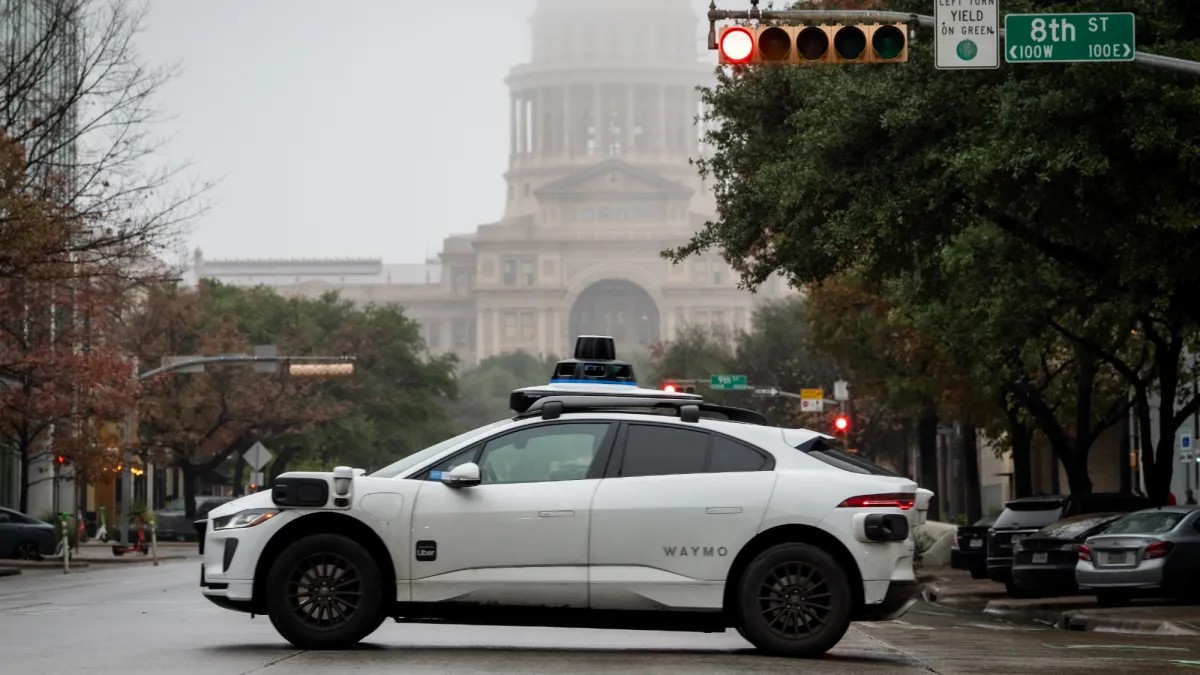
Most driverless cars rely on LiDAR (Light Detection and Ranging), cameras, and radar. LiDAR, while highly effective in clear conditions, is easily blocked by buildings or large objects, creating blind spots. This is a significant safety concern, as illustrated by the recent incident in Santa Monica, California, where a Waymo vehicle struck a child who emerged from behind an SUV. The car detected the child after they were already in the road, highlighting the need for predictive detection capabilities.
How HoloRadar Works
The Penn team bypassed the limitations of light-based sensors by leveraging radio waves. Unlike LiDAR’s short wavelengths, radio waves are longer, allowing them to “bend” around corners. Walls and surfaces act like mirrors, reflecting radio signals in predictable patterns. The system then uses an AI model to filter this data and reconstruct a 3D representation of hidden objects.
“Robots and autonomous vehicles need to see beyond what’s directly in front of them,” says Mingmin Zhao, study senior author. “This is an important step toward giving robots a more complete understanding of their surroundings.”
Testing and Limitations
HoloRadar was successfully tested on mobile robots navigating campus corners, consistently detecting hidden people. The system isn’t intended to replace existing sensors but to supplement them, adding an extra layer of perception. Previous attempts at solving this problem, such as MIT’s shadow-detection system or Stony Brook University’s single-photon LiDAR, relied on light and struggled in poor visibility.
Safety Implications
As autonomous vehicles become more prevalent, accidents will inevitably occur. At least a dozen fatalities linked to self-driving cars have already been reported in the U.S., and that number is likely to grow with increased deployment. HoloRadar, alongside other advancements, could reduce these incidents by giving driverless cars a more comprehensive awareness of their surroundings.
Ultimately, the ability to “see” around corners represents a critical step toward making autonomous vehicles safer and more reliable in real-world conditions.


