


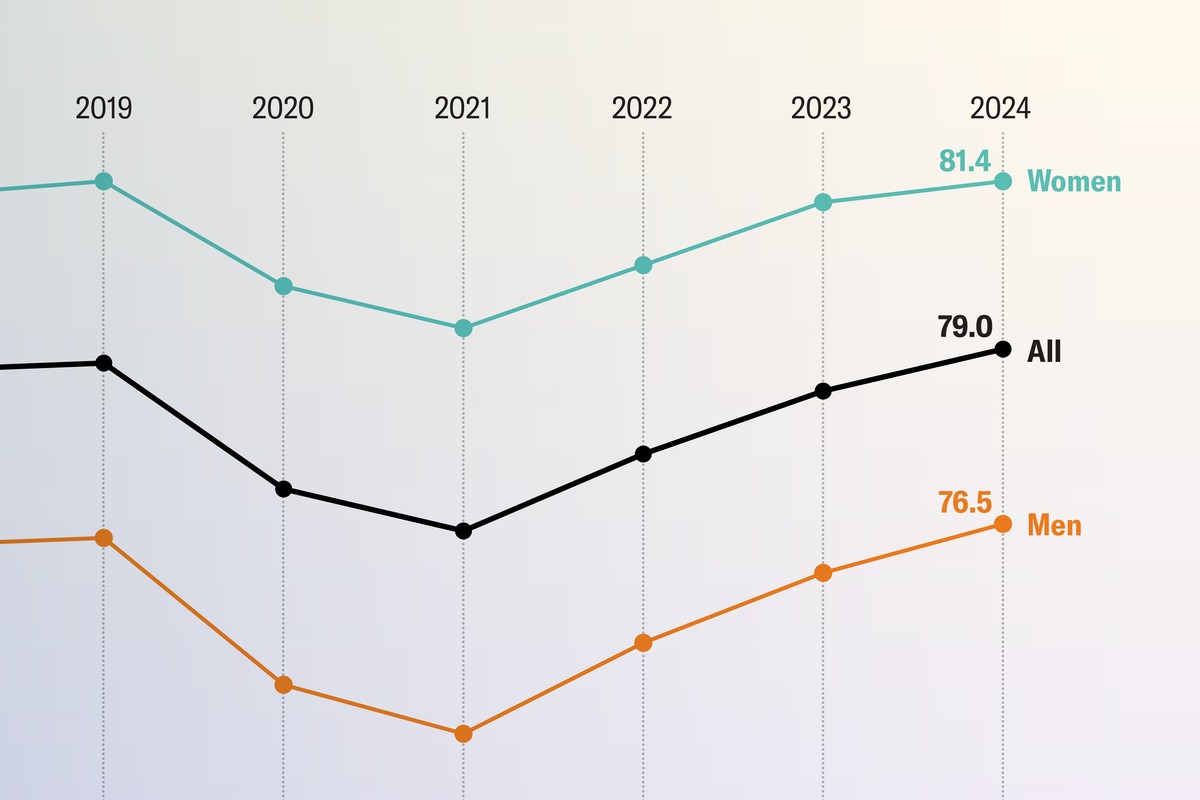
The average American born in 2024 can now expect to live to age 79, marking the highest life expectancy ever recorded in the United States. This represents an increase of over half a year compared to 2023, and surpasses any previous figure dating back to 1900. While this is positive news, the U.S. still lags behind most other developed nations, where life expectancy typically falls in the low to mid-80s.
Recovery From Recent Declines
The improvement comes after a sharp drop during the COVID-19 pandemic, which lowered U.S. average life expectancy to 76.4 years in 2021. While the current figure signals a recovery, it’s crucial to note that significant health challenges persist. Preliminary data from the CDC indicate approximately 47,539 deaths involving COVID and around 87,000 deaths from drug overdoses between October 2023 and September 2024. Despite these numbers, the overall age-adjusted death rate has decreased, from 751 deaths per 100,000 Americans in 2023 to 722 in 2024.
Leading Causes of Death
The primary causes of death remain consistent: heart disease, cancer, and unintentional injuries. Suicide has replaced COVID as the tenth most common cause of mortality, but the age-adjusted death rate for all top ten causes has fallen, particularly for unintentional injuries—dropping from 62.3 to 53.3 deaths per 100,000 Americans.
Underlying Concerns
Experts caution that this recovery may mask deeper, longer-term issues. Andrew Stokes of Boston University points out that improvements in U.S. life expectancy have been stagnating for over a decade, even before the pandemic. Factors like rising rates of obesity and high blood pressure pose ongoing threats, suggesting that the current progress may not be sustainable.
Philip Cohen, a demographer at the University of Maryland, adds that the U.S. continues to face systemic problems in public health, including stubbornly high infant mortality rates and a declining trend in healthcare coverage. He emphasizes that modest gains in life expectancy should not be celebrated as major achievements when other developed countries consistently outperform the U.S. in this metric.
“We may be back above where we were before the pandemic, but it is too little, too late, as we were already trending much lower than countries with comparable economic profiles.”
The current recovery, while encouraging, does not address the underlying structural issues that keep the U.S. life expectancy below that of other wealthy nations. Concerns remain about the future direction of U.S. healthcare, with increasing numbers of uninsured individuals and diminishing support for public health initiatives.


