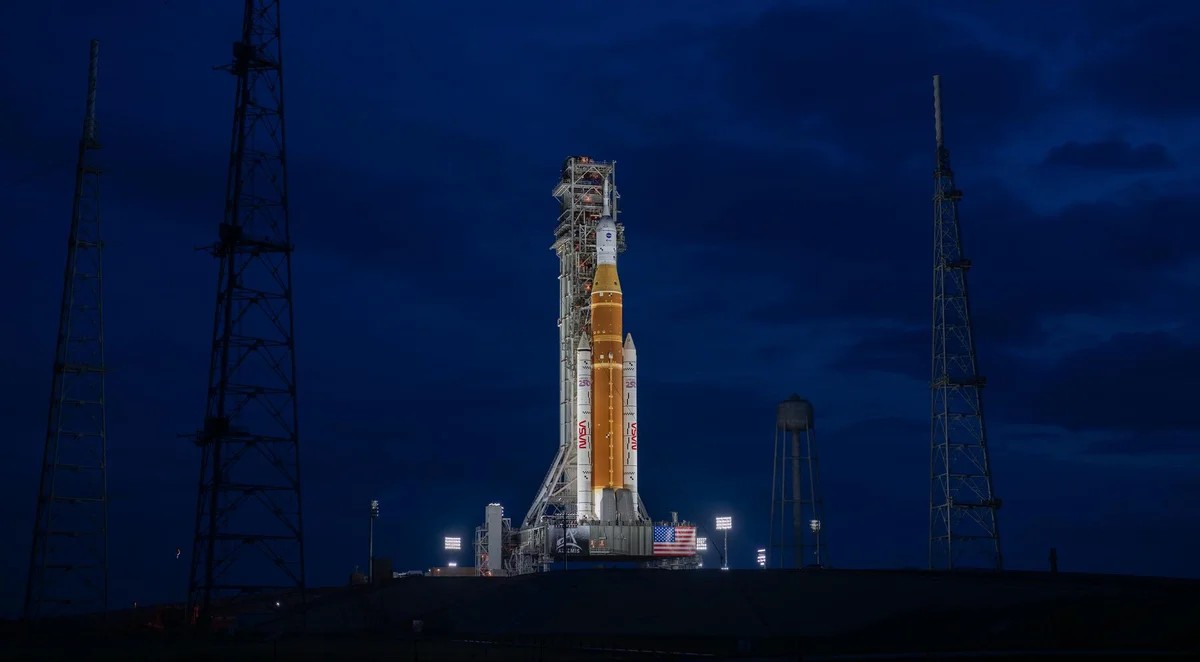
NASA has announced a new date – February 19 at 8:30 PM EST – to repeat a vital test for its Artemis II mission, a crewed flight planned to orbit the moon. This “wet dress rehearsal” involves loading liquid fuel into the massive Space Launch System (SLS) rocket and running through a launch countdown simulation.
Why This Test Matters
The success of this test is essential for Artemis II to proceed towards its scheduled launch. The initial attempt on February 2 revealed critical flaws in both the SLS rocket and the Orion capsule, which will carry the four astronauts. Specifically, liquid hydrogen fuel leaked from the rocket, and a valve on the capsule malfunctioned.
This isn’t the first time NASA has faced such issues: similar fuel leaks delayed the uncrewed Artemis I mission for months. The repeated problems with hydrogen fuel highlight the inherent difficulties in working with this volatile substance, which requires extreme cryogenic temperatures for safe handling.
What Has Changed?
NASA engineers believe they’ve identified and fixed the hydrogen leak by replacing a filter in the ground support equipment. This filter may have restricted fuel flow, causing the leak during the first attempt. While this fix appears straightforward, it underscores the complexity of ensuring reliable performance in a system with thousands of interconnected parts.
Artemis II: A Crewed Return to Lunar Orbit
Unlike its predecessor, Artemis II will not be unmanned. The mission will carry four astronauts – NASA’s Reid Wiseman, Christina Koch, Victor Glover, and Canadian Space Agency astronaut Jeremy Hansen – on a ten-day journey around the moon.
The crew will conduct scientific observations of the moon’s far side, a region largely unexplored due to its distance from Earth. They will also perform experiments onboard the Orion capsule before returning for a splashdown in the Pacific Ocean near San Diego. This mission represents a significant step towards establishing a sustained human presence in space.
The Artemis II mission is more than just another space flight; it’s a demonstration of NASA’s commitment to long-term lunar exploration, setting the stage for future crewed missions to the moon and potentially beyond.