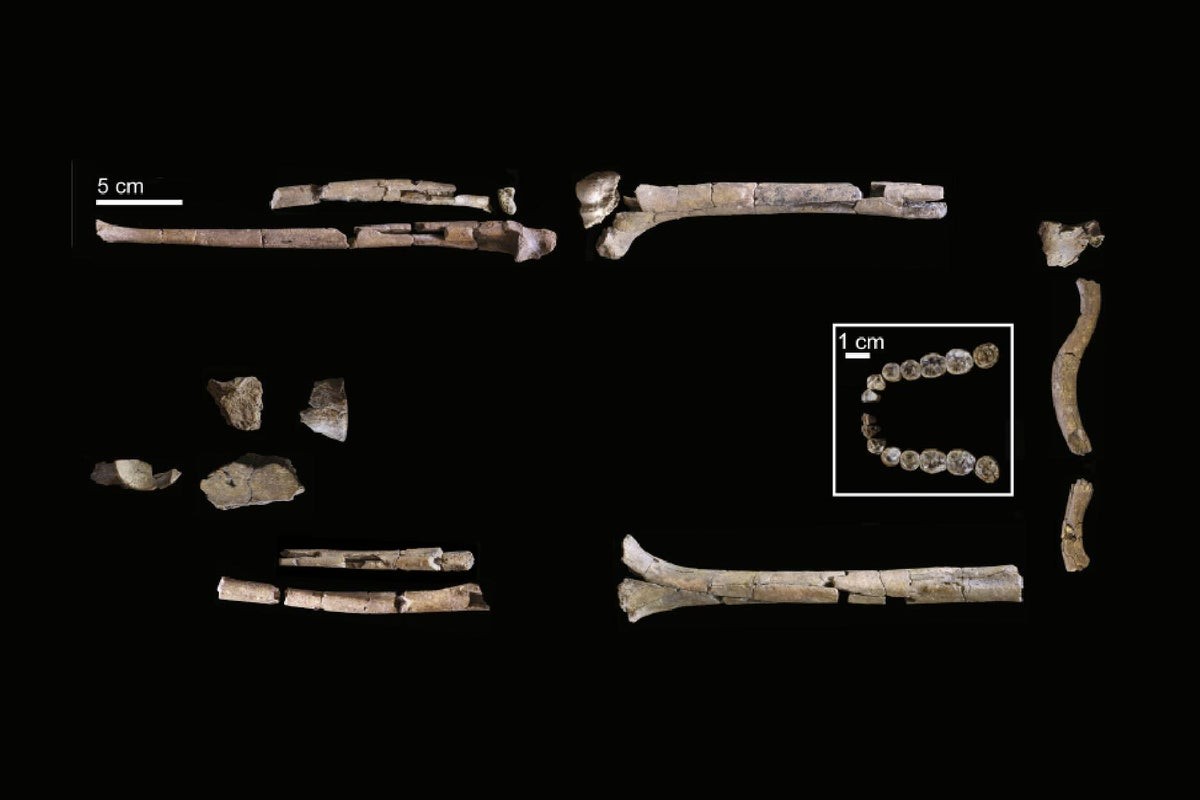
A remarkably complete Homo habilis skeleton unearthed in the Lake Turkana Basin of northern Kenya is reshaping our understanding of one of humanity’s earliest ancestors. The discovery, detailed in a new study published January 13 in the Anatomical Record, provides unprecedented insight into a species that lived over two million years ago and bridged the gap between ape-like predecessors and modern humans.
The Puzzle of Homo habilis
Homo habilis has long been recognized for its comparatively large brain and flatter face, setting it apart from earlier hominins like Australopithecus africanus. However, the fragmented nature of previously discovered remains left many questions unanswered. This new skeleton, recovered over several years beginning in 2012, offers a more holistic view. The bones include a nearly complete set of lower teeth, collarbones, arm and forearm bones, and pelvic fragments.
A Body Built Differently
The analysis confirms that H. habilis possessed long and powerfully built arms, more akin to those of apes than modern humans. Surprisingly, the individual was also relatively small, potentially even smaller than the famous 3.2-million-year-old Australopithecus afarensis specimen known as “Lucy.” This challenges earlier assumptions about a linear progression toward larger body sizes in early Homo species.
“A finding like this does give hope,” says William Harcourt-Smith, a paleoanthropologist at the American Museum of Natural History, highlighting the significance of complete skeletons in unraveling evolutionary mysteries. “It shows us that hard work in the field, and constantly looking for them, reaps important dividends.”
Implications for Human Evolution
While the skeleton doesn’t yet reveal the full picture of H. habilis ’ lower body, the pelvic fragment suggests a more upright posture than earlier hominins. Understanding how H. habilis walked and moved is crucial for tracing the evolution of human bipedalism. As one of the earliest members of our genus, Homo, insights into this species illuminate the broader trajectory of human evolution.
“This study underlines how crucial individual fossil discoveries can be,” says Rebecca Wragg Sykes, an honorary archeology researcher at the University of Cambridge and the University of Liverpool in England. “Just a few new fragments can transform our view not only of that species but [of] their evolutionary context, too.”
The discovery underscores that early human evolution was not a simple, straight-line progression. Instead, it was a complex process with species exhibiting traits that defied expectations. The ongoing analysis of this skeleton promises to refine our understanding of Homo habilis and its place in the story of humankind.