Cities are increasingly turning to the Earth beneath their feet for a sustainable solution to heating and cooling. A growing number of urban geothermal projects, like the recently completed Riverie high-rise in Brooklyn, are demonstrating how dense urban areas can tap into stable underground temperatures to drastically reduce reliance on fossil fuels. This isn’t about deep-earth power generation; it’s about leveraging a consistent thermal resource just tens to hundreds of feet below the surface.
The Riverie: A Landmark Project
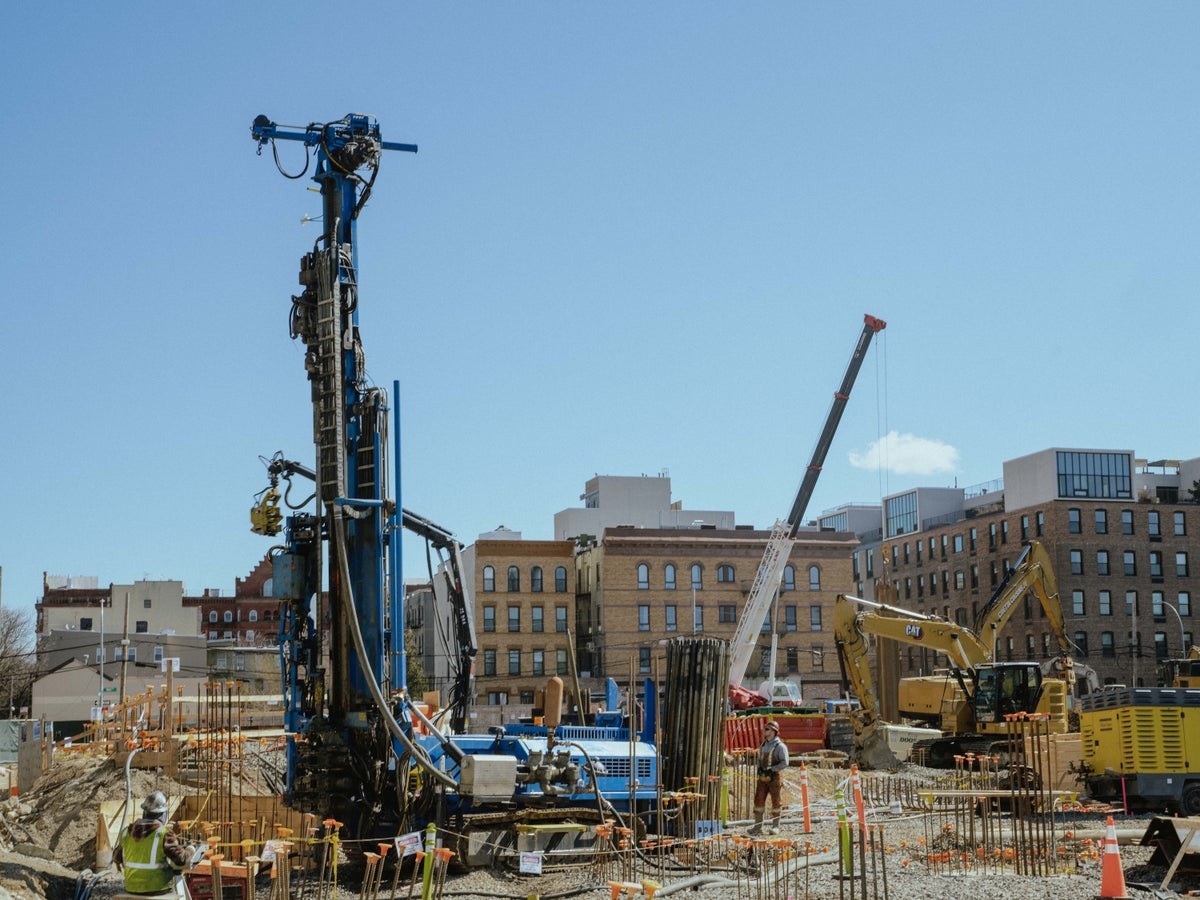
The Riverie stands as a prime example of this trend. With 320 boreholes drilled nearly 500 feet deep, it’s currently the largest geothermal residential building in New York State and the largest high-rise geoexchange system in the U.S. Developers at Lendlease strategically installed the system before laying the building’s foundation—a critical step, given the system’s permanent, underground nature. The sheer scale is impressive: 65 miles of piping connects to 1,100 heat pumps within the 834-unit building.
How Urban Geothermal Works
Unlike traditional geothermal plants that extract heat from miles underground, urban systems exploit the relatively stable temperatures found near the surface. The first 100 meters (328 feet) of earth act as a thermal sponge, absorbing and releasing heat from city activity. Below that depth, the natural geothermal gradient takes over, providing consistent temperatures year-round.
At the Riverie, a fluid mixture circulates through U-shaped pipes (ground loops) buried beneath the building. In winter, this fluid absorbs heat from the ground and is concentrated via a compressor before being circulated through indoor air. The process reverses in summer, dumping excess heat back into the earth. This system relies on ground-source heat pumps, which efficiently transfer thermal energy rather than generating it from scratch.
Engineering Challenges and Solutions
Installing such a system in a dense urban environment presents unique challenges. The Riverie’s waterfront location required specialized drilling techniques to prevent borehole collapse in loose, waterlogged soil. A dual rotary drill rig—which rotates both the inner drill pipe and an outer steel casing simultaneously—ensured stability during the 499-foot deep drilling process.
Engineers used steel casing to shield the boreholes from groundwater and corrosion-resistant high-density polyethylene pipes for long-term durability. The site’s bedrock geology proved ideal for efficient thermal exchange, though careful management is still essential to avoid overheating.
The Importance of Ongoing Management
The success of urban geothermal isn’t limited to installation; continuous monitoring and management are crucial. Diverso Energy CEO Tim Weber stresses that an unmanaged bore field can overheat. One key strategy is to repurpose excess heat in summer to preheat water for the building’s boiler, balancing the system’s overall temperature. The stakes are high: a failure in the buried system is not an option, given its integral role in the building’s climate control.
Urban geothermal energy represents a shift toward more sustainable infrastructure. As cities face increasing pressure to reduce emissions, tapping into the Earth’s natural thermal resources will likely become a standard practice, not just an innovative exception.