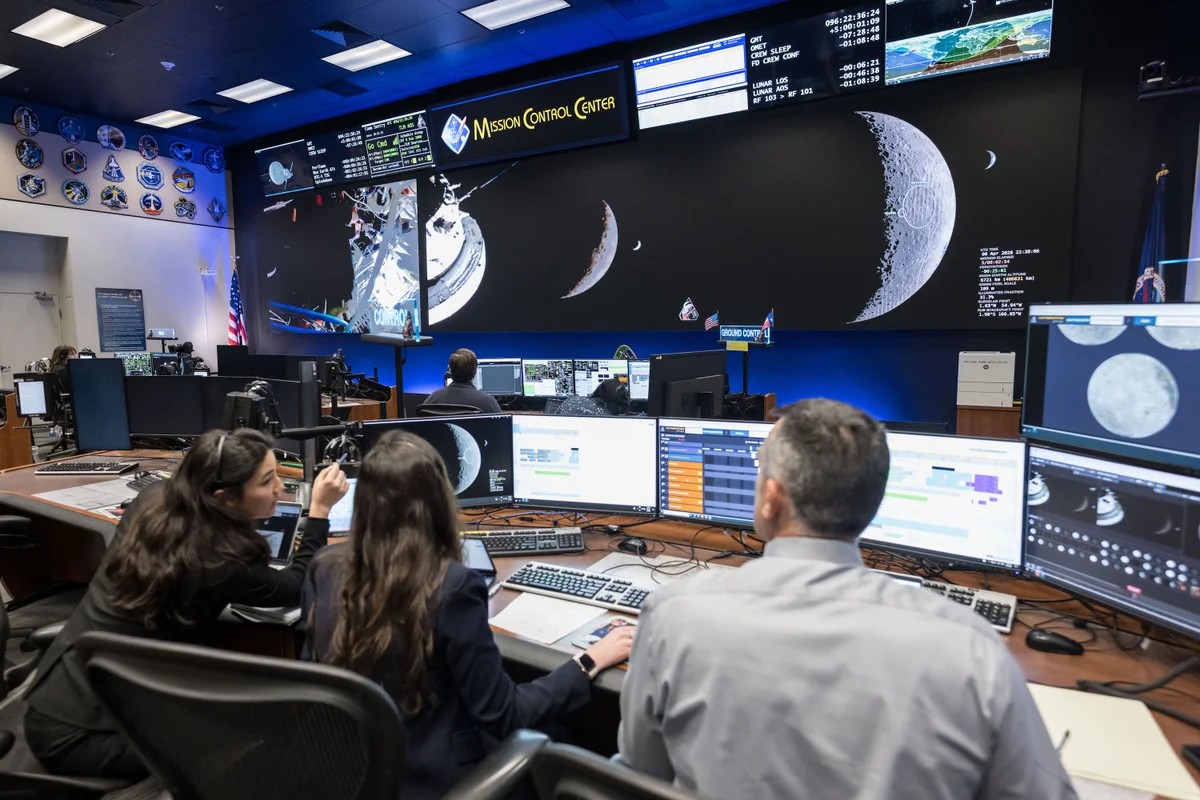
The Artemis II mission is entering its final, most critical phase. After eight days of lunar exploration, the crew of the Orion capsule—Reid Wiseman, Victor Glover, Christina Koch, and Jeremy Hansen —is now shifting their focus from scientific discovery to the complex logistics of returning safely to Earth.
The Final Countdown to Reentry
As the 10-day mission nears its conclusion, NASA officials have transitioned from mission execution to reentry preparation. While the crew has spent the week conducting science and recovering from the rigors of space, the upcoming days are dedicated to ensuring a flawless descent through Earth’s atmosphere.
To maximize safety and preparation, mission flight director Rick Henfling noted that certain secondary activities were canceled. Specifically, a planned exercise involving the construction of a radiation shelter using onboard storage was scrapped to allow the crew more time to prepare the cabin for the return journey.
Testing Manual Control
One key priority during these final days is validating the spacecraft’s manual handling. The crew will practice steering the Orion capsule manually—a vital test for future missions that will require the capsule to dock with other spacecraft in orbit.
The Physics of a 13-Minute Descent
The transition from space to the ocean is a violent and rapid process. On Friday, the mission will culminate in a high-speed reentry that lasts only 13 minutes.
The descent involves a dramatic deceleration process:
– Atmospheric Entry: The capsule hits Earth’s upper atmosphere at staggering speeds.
– Braking: The craft will deploy thrusters to manage its trajectory and speed.
– Parachute Deployment: To prevent a catastrophic impact, the capsule will deploy a sequence of three parachute types—drogues, pilots, and main chutes.
– Final Velocity: These systems must slow the capsule from nearly 35,000 feet per second to approximately 25 feet per second by the time it hits the Pacific Ocean.
Recovery Operations at Sea
A successful landing is only half the battle; the astronauts must then be retrieved from the ocean. The recovery operation is being led by Liliana Villarreal, coordinating from the USS John P. Murtha, a Navy vessel currently positioned to intercept the capsule in the Pacific.
Once the splashdown occurs, Navy divers will approach the Orion capsule to assist the crew. The astronauts will be transitioned from the capsule onto an inflated recovery craft, described by Villarreal as a “front porch,” to ensure they are safely brought aboard the recovery ship.
A Mission of Validation
While the primary goal of Artemis II was lunar exploration, its most significant takeaway for NASA may be the validation of the Orion spacecraft itself. Flight director Rick Henfling expressed confidence in the hardware, stating that the mission has proven the spacecraft is “well-functioning” and that the team is prepared for a nominal entry —meaning a return that follows all planned, standard procedures.
The success of this mission serves as a vital “proof of concept” for NASA’s deep-space hardware, ensuring that the systems designed to carry humans to the Moon are capable of bringing them home safely.
Conclusion
As Artemis II prepares for its final descent, the mission has moved from the realm of scientific exploration into a high-stakes test of reentry technology. The successful recovery of the crew will provide NASA with the essential data needed to support future crewed missions to the lunar surface and beyond.