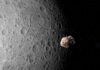
NASA’s Artemis II mission successfully launched on Wednesday evening, sending four astronauts on a historic ten-day journey to the moon and beyond. The crew—Reid Wiseman, Christina Koch, Jeremy Hansen, and Victor Glover—lifted off from the Kennedy Space Center in Florida at 6:35 P.M. EDT, embarking on a flight that will take them farther from Earth than any human in over half a century.
Mission Details and Initial Progress
The astronauts are traveling aboard the Orion spacecraft, which is currently coasting in Earth orbit after a stabilization burn. A critical maneuver, known as the translunar injection burn, is scheduled for April 2nd to set the spacecraft on its precise trajectory toward the moon. NASA officials briefly experienced a communication loss shortly after launch, but connectivity was swiftly restored.
NASA Administrator Jared Isaacman confirmed that the crew is in good spirits: “[They’re] safe, they’re secure, and they’re in great spirits.” The team will conduct a lunar flyby on April 6th, observing the far side of the moon—a region never directly viewed by human eyes.
Scientific Objectives and Crew Tests
This mission serves as a vital testing phase for future lunar landings. The astronauts will evaluate Orion’s systems, including its advanced life support features (such as a new space toilet), perform capsule maneuvers, and monitor their physiological responses to prolonged microgravity exposure. They will also photograph and document the lunar surface in preparation for the Artemis IV mission, which will include a week-long surface stay in 2028.
One unique event the crew will witness is a solar eclipse as the moon passes in front of the sun, revealing only the star’s corona. According to Lori Glaze, acting associate administrator for NASA’s Exploration Systems Development Mission Directorate, this will be a “pretty cool and unique opportunity.”
Long-Term Goals: Lunar Exploration and Permanent Base
The Artemis II mission is considered the “opening act” for NASA’s renewed lunar exploration program. While this flight does not involve a landing, it lays the groundwork for establishing a permanent human presence on the moon. Isaacman stated that NASA is “back in the business of sending astronauts to the moon” after a 54-year hiatus.
The crew is expected to splash down back on Earth on April 10th, completing a mission that marks a significant step toward sustained lunar exploration and the eventual construction of a lunar base.