Ask the nurses. Ask the doctors.
77% of physicians worry they are losing their edge. 70% of nurses share the fear. They aren’t guessing. They feel it happening in real time.
“Just being aware that this phenomenon existshopefully provokes some self-reflection,” says Kevin Crowston at Syracuse University. He wants to know what people are willing to keep for themselves versus what they hand over to a machine.
It sounds like a panic. Until you see the data. Then it looks like erosion.
Spoiled by tools
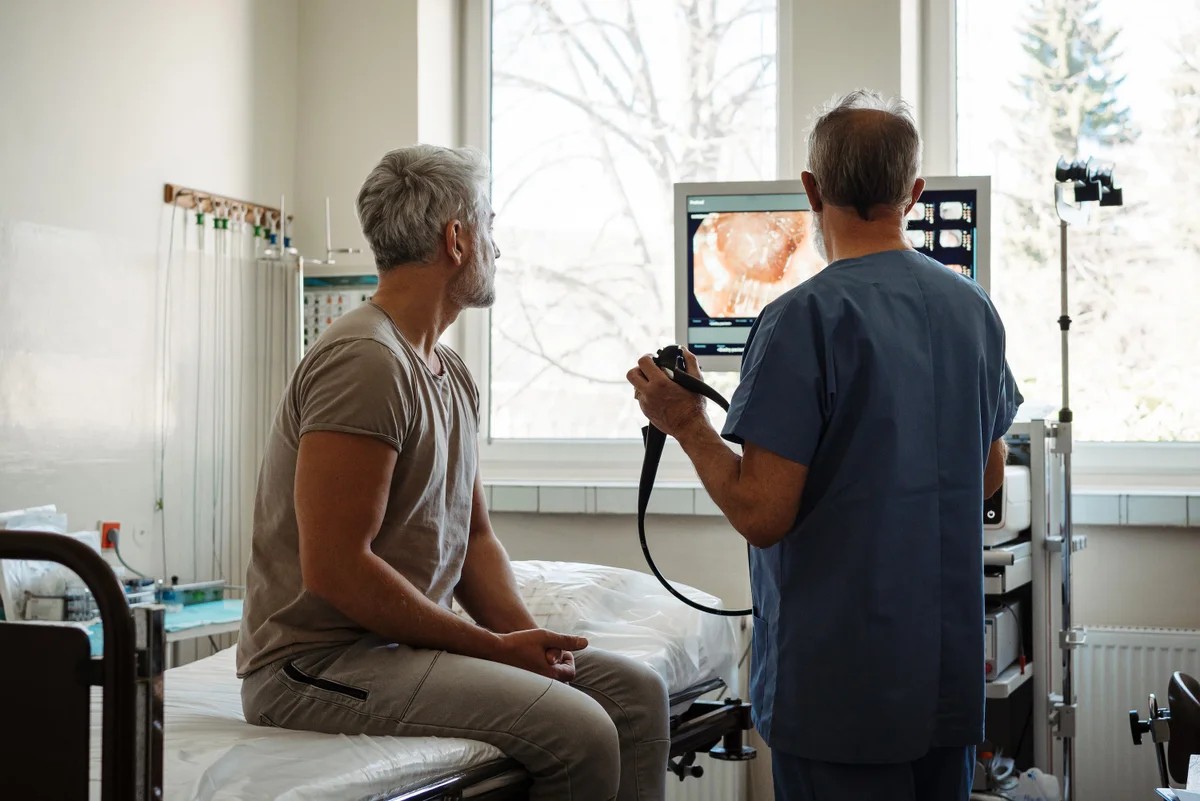
A study in Poland put endoscopists to the test. These doctors aren’t rookies. They’ve performed thousands of colonoscopies. They know what precancerous adenomas look like.
But they got an AI helper. The system flags lesions on screens in real time.
The doctors loved it. Then they got worse at their job.
Here is the math:
- Before the AI: 28.4% adenoma detection rate.
- After relying on the AI (even on days they turned it off): 22.4% detection rate.
Three months. That’s all it took to see the slide. Robert Wachter at UCSF points out that high-skill professionals get lazy when the computer does the thinking. They become less focused. Less responsible. Without the digital crutch, they stumble.
Yuichi Mori from the University of Oslo agrees. He says there’s no fix yet. Just a warning. We are watching experts unlearn their trade.
The illusion of competence
It isn’t just medicine. Computer science is bleeding too.
Researchers at Anthropic ran an experiment. They took 52 engineers and gave them a basic coding task.
Everyone could search the web. But half could use an AI assistant. The other half? On their own.
Then came the quiz.
- No AI: Average score of 67%.
- With AI: Average score of 50%.
The AI group performed the task fine. But when asked what they learned? They failed. especially when asked to fix errors in their own code. They hadn’t learned the logic. They’d just borrowed the output.
Crowston calls it an “odd disconnect.” You look good while doing the work, but your brain is idle. You’re not developing the skill. You’re renting it.
Is this learning? Or just outsourcing your thoughts?
Memory has limits
Remember when GPS ruined our internal compasses? Same story, higher stakes.
Tapani Rinta-Kahila at the Hanken School ofconomics points out that AI is the first tech to automate thinking itself. Not just calculation. Interpretation. Reasoning.
He looked at accountants using non-AI software for over a decade. Take the tool away and they forgot how to do basic tasks. Simple as that. The brain stops working because the tool is always there.
He’s worried about the next generation. Programmers who skip the foundational coding grunt work because a model writes it for them? They won’t understand the foundation. It happens in law too. In accounting. In every knowledge-heavy field.
There’s no easy solution.
Rinta-Kahila says we need to know our limits. We need to understand how these black boxes actually work. We shouldn’t trust them blindly. It’s a balancing act—relying on the speed of the machine while keeping the vigilance of a human.
For now though. The skills are slipping away.