Birds endure freezing temperatures using a combination of biological features, behavioral strategies, and efficient energy management. While humans bundle up in layers, birds rely on evolved mechanisms to thrive even in harsh conditions.
The Natural Thermal Layer: Feathers
Feathers are the primary defense against the cold. Birds grow denser plumage in colder months – increasing feather density by 35-70%. This is similar to how humans switch from summer to winter clothing. Down feathers, a fluffy underlayer close to the skin, trap body heat effectively. The ethics of down harvesting are a concern, leading ethical brands to use synthetic insulation that mimics down’s thermal properties.
Heat Trapping and Body Postures
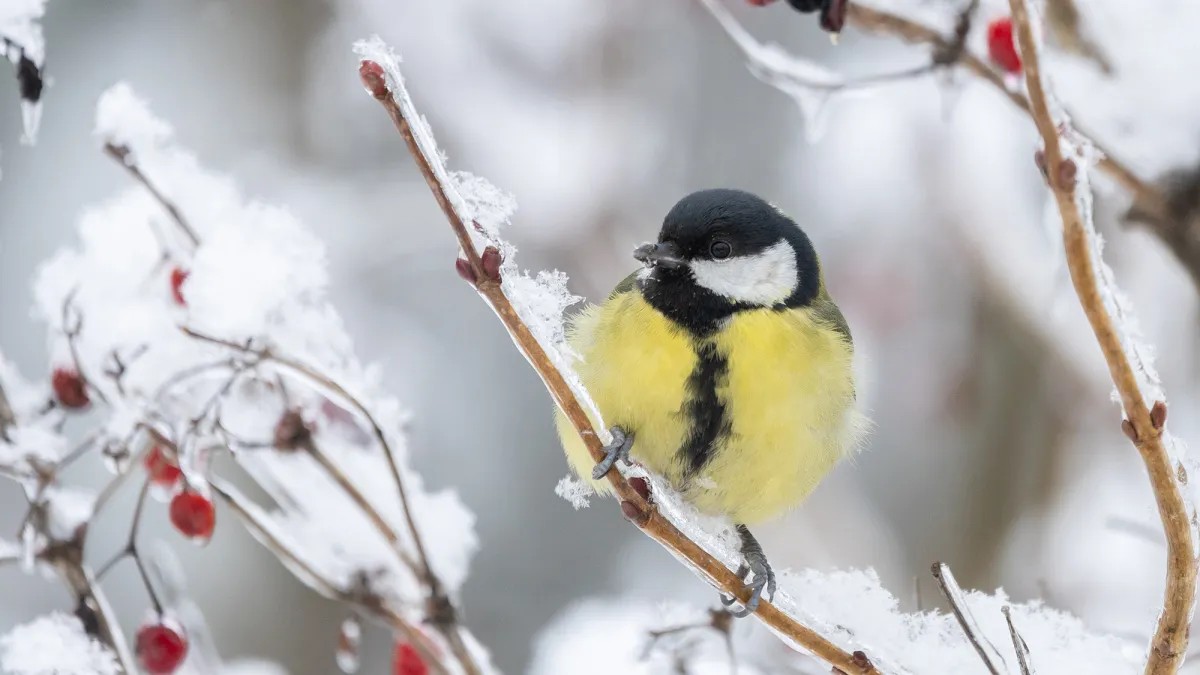
Birds puff up in cold weather, trapping air between their feathers to create an insulating layer. They also minimize heat loss by covering exposed areas: tucking beaks into back feathers, squatting to cover legs, or standing on one leg to reduce exposed skin surface by half.
Shelter and Social Huddling
Birds seek shelter from the wind and cold just like humans. Some hide behind ground features, while others burrow into snow for insulation. Cavities in trees provide refuge, with smaller birds huddling together inside to share body heat.
Built for Cold: Physiological Adaptations
Birds that remain in cold regions year-round, such as the Black-capped chickadee, possess specialized adaptations. They shiver to generate heat while foraging for high-fat foods like seeds. Ducks and gulls, often seen on frozen surfaces, have few pain receptors in their feet. Their countercurrent heat exchange system transfers heat from warm blood to cooler blood, preserving core temperature while keeping feet functional. Some can also restrict blood flow to their feet, further reducing heat loss.
Food Storage and Torpor
Birds prepare for winter by caching food in advance – hiding seeds and insects for later consumption. Some species enter daily torpor, lowering body temperature, heart rate, and breathing to conserve energy. Chickadees exhibit remarkable spatial memory, with a hippocampus that expands in winter to remember cached food locations. A single chickadee can store up to 80,000 seeds in a season, surpassing squirrel caching behavior.
In essence, birds survive winter through a combination of feathers, behavioral adaptations, physiological mechanisms, and strategic resource management. This ensures they thrive even when humans struggle to stay warm.