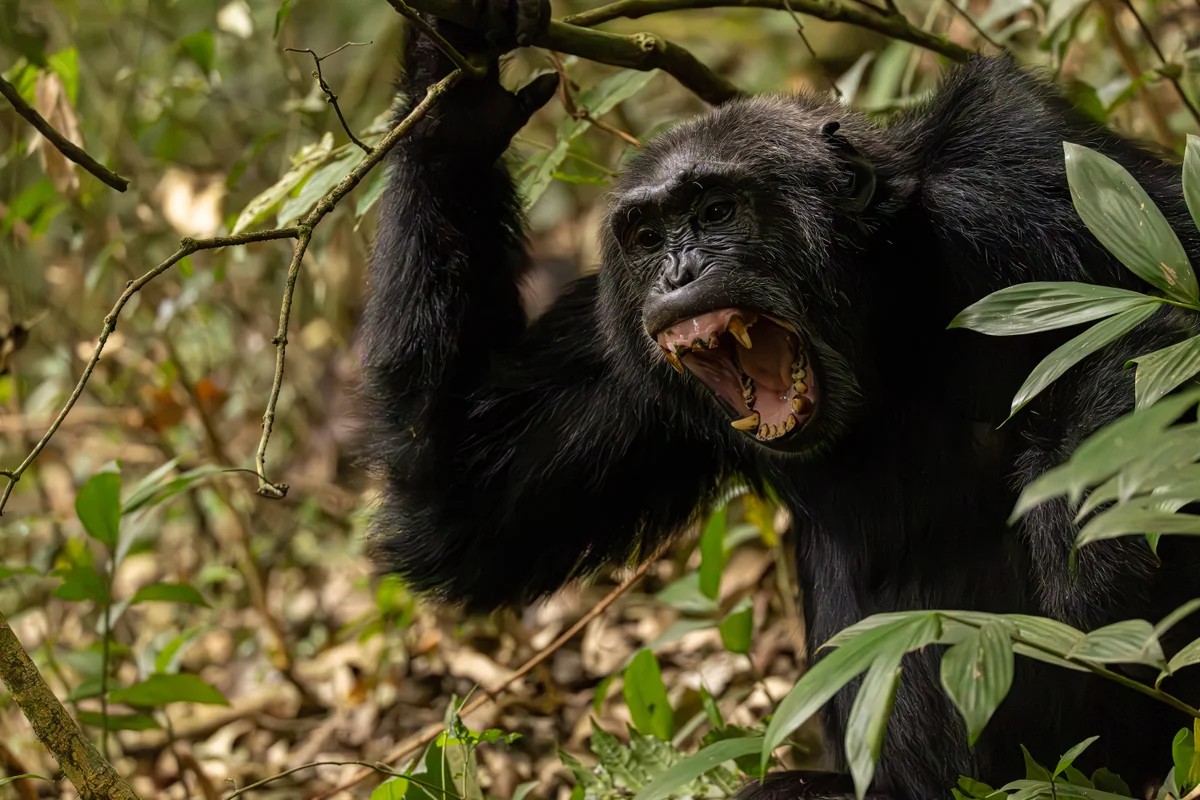
A massive community of chimpanzees in Uganda’s Kibale National Park has undergone a violent and rare transformation. What was once a single, cohesive group of approximately 200 individuals has fractured into two warring factions, leading to a period of targeted, lethal aggression.
New research published in the journal Science details this “civil war,” providing a rare glimpse into the mechanics of social collapse in our closest living relatives.
The Breaking of a Community
For decades, the Ngogo chimpanzee community functioned as a single unit. While the population was divided into two primary social clusters—the Central and Western groups—they remained integrated. They shared territory, moved between clusters, and interbred, maintaining a social fabric that prevented isolation.
This stability changed abruptly in 2015. Researchers noted a shift in behavior: instead of the usual mingling, the two groups began to avoid one another. By 2017, the clusters had completely separated geographically, patrolling distinct territories and treating the other as outsiders.
A Pattern of Targeted Violence
The transition from social separation to active warfare was marked by extreme violence. Between 2018 and 2024, researchers documented a grim pattern of aggression by the Western group against the Central group:
- Direct killings: Western adults killed seven males and 17 infants from the Central group.
- Disappearances: At least 14 Central males disappeared without a trace. Because these individuals showed no signs of illness, researchers suspect they were victims of lethal attacks.
- Ongoing conflict: The violence has persisted, with new attacks documented even after the primary study period ended.
Why Do Groups Fracture?
Scientists estimate that such community splits are exceedingly rare, occurring on average only once every 500 years. The Ngogo split appears to be the result of a “perfect storm” of social stressors. Lead author Aaron Sandel suggests several contributing factors:
- Overpopulation: The group size may have become too large to sustain stable social bonds.
- Resource Competition: Intense pressure over food and reproductive rights.
- Leadership Shifts: Changes in “alpha male” dynamics that disrupted the social hierarchy.
- Loss of “Social Bridges”: The death of key adult individuals who previously acted as links between the two clusters.
This phenomenon is not unprecedented; a similar split was observed by Jane Goodall in Gombe National Park during the 1970s. However, the Ngogo case is unique because it provides definitive, long-term evidence of a “civil war” occurring in a natural setting.
Lessons for Human Conflict
The implications of this study extend beyond primatology. In human sociology, conflict is often attributed to cultural divides—such as religion, ethnicity, or language—leading to peace efforts that focus on “cultural diplomacy.”
However, the Ngogo chimpanzees suggest a different driver: the breakdown of interpersonal networks.
If conflict is rooted in the collapse of social ties rather than just cultural differences, then peace-building must focus on more than just understanding “the other.” It requires actively nurturing the friendships and social connections that bridge different groups.
The Ngogo study suggests that maintaining inclusive, interconnected social networks may be the most fundamental defense against the slide into organized violence.
Conclusion: The violent split of the Ngogo chimpanzees demonstrates that when social bonds and “bridge” individuals disappear, even large communities can descend into lethal conflict. This highlights the vital role that interpersonal relationships play in maintaining social stability.