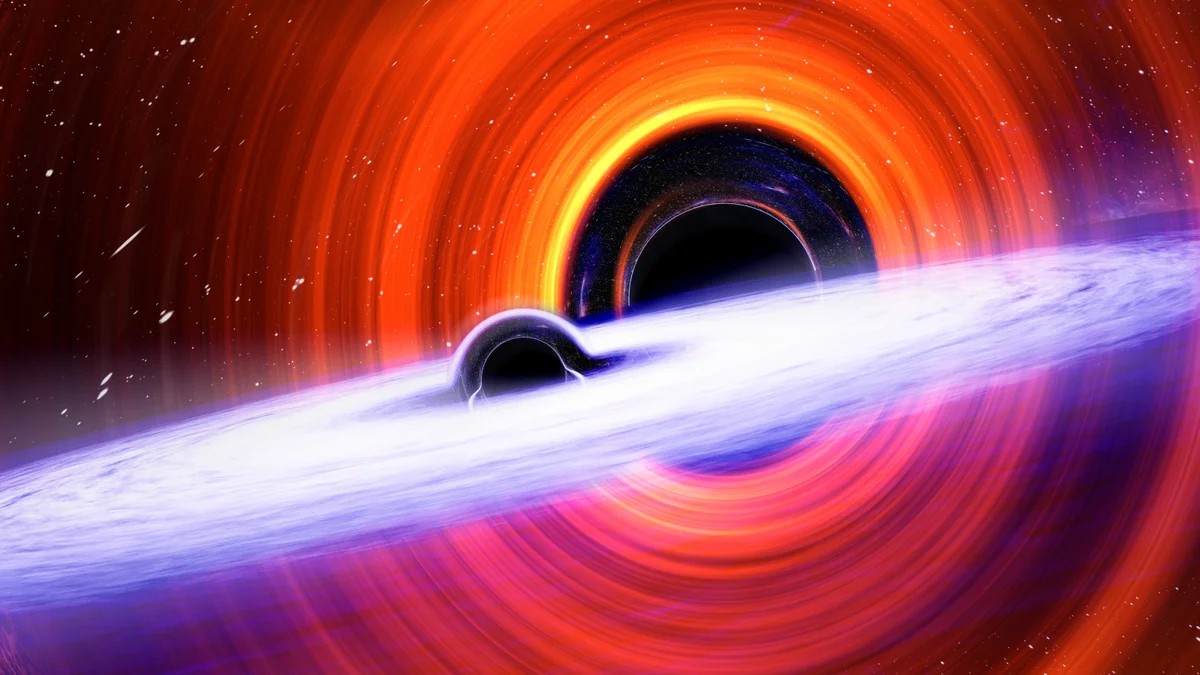
For the past decade, scientists have been listening to the universe in a whole new way – not through light, but through the ripples in spacetime itself, known as gravitational waves. These faint echoes of cataclysmic events, like black holes colliding hundreds of millions of light-years away, are revealing unprecedented insights into the cosmos. However, as the number of detected events surges, the picture is growing more complex, raising as many questions as answers.
The Expanding Network of ‘Ears’
The first confirmed gravitational wave detection in 2016 marked a turning point. Since then, four major observatories have formed a global network: the two LIGO facilities in the U.S., Virgo in Italy, and KAGRA in Japan. The collaboration, known as LVK, has dramatically increased detections, with their fourth observation period yielding more events than the previous three combined – now totaling 218 candidate events. This flood of data is not just a success of engineering, it’s a shift in how we observe the universe.
Why Gravitational Waves Matter
Unlike traditional astronomy relying on light, gravitational waves penetrate the universe unimpeded, carrying information directly from the most extreme environments. These waves reveal details about collapsing stars and merging black holes that light cannot. Researchers are essentially performing cosmic paleontology, reconstructing the lives of massive stars from the “fossils” of black holes they leave behind.
The Puzzles Within the Data
While many detected mergers appear “typical” (equal-mass black hole collisions), the catalog increasingly includes anomalies: unusually heavy black holes, wildly spinning pairs, and systems with misaligned orbits. One event, GW231123, involved black holes merging into a final mass 225 times that of the sun. These oddities suggest complex formation histories, possibly involving multiple prior mergers.
However, scientists are cautious about overinterpreting the data. The field is still in its early stages, and many processes can produce similar wave signatures. “There are clues, but they are by far not a ‘smoking gun’,” says physicist Salvatore Vitale.
The Limits of Current Technology
The LVK network, while powerful, has limitations. Its sensitivity restricts detection to relatively strong signals, and planned maintenance shutdowns interrupt observations. Expanding the catalog requires either larger, more sensitive detectors or moving observatories into space.
Current facilities work by measuring minuscule distortions in spacetime using kilometer-long laser interferometers. These instruments are incredibly sensitive to environmental noise: earthquakes, ocean waves, even passing trucks can interfere with measurements. To detect fainter signals, the next generation of detectors must overcome these obstacles.
The Future of Gravitational-Wave Astronomy
Researchers acknowledge progress may be slower than initially expected. The universe is messy, and unraveling its secrets requires patience and continued refinement of both technology and analysis. Building larger observatories or launching space-based detectors remains a long-term goal.
Despite the challenges, the field’s momentum is undeniable. Each new observation refines our understanding of black hole formation, stellar evolution, and the fundamental laws of the universe. The cosmic symphony is growing louder, and scientists are determined to decipher its full, complex message.
The continued study of gravitational waves promises to redefine our knowledge of the cosmos, even if the answers come one painstaking ripple at a time.