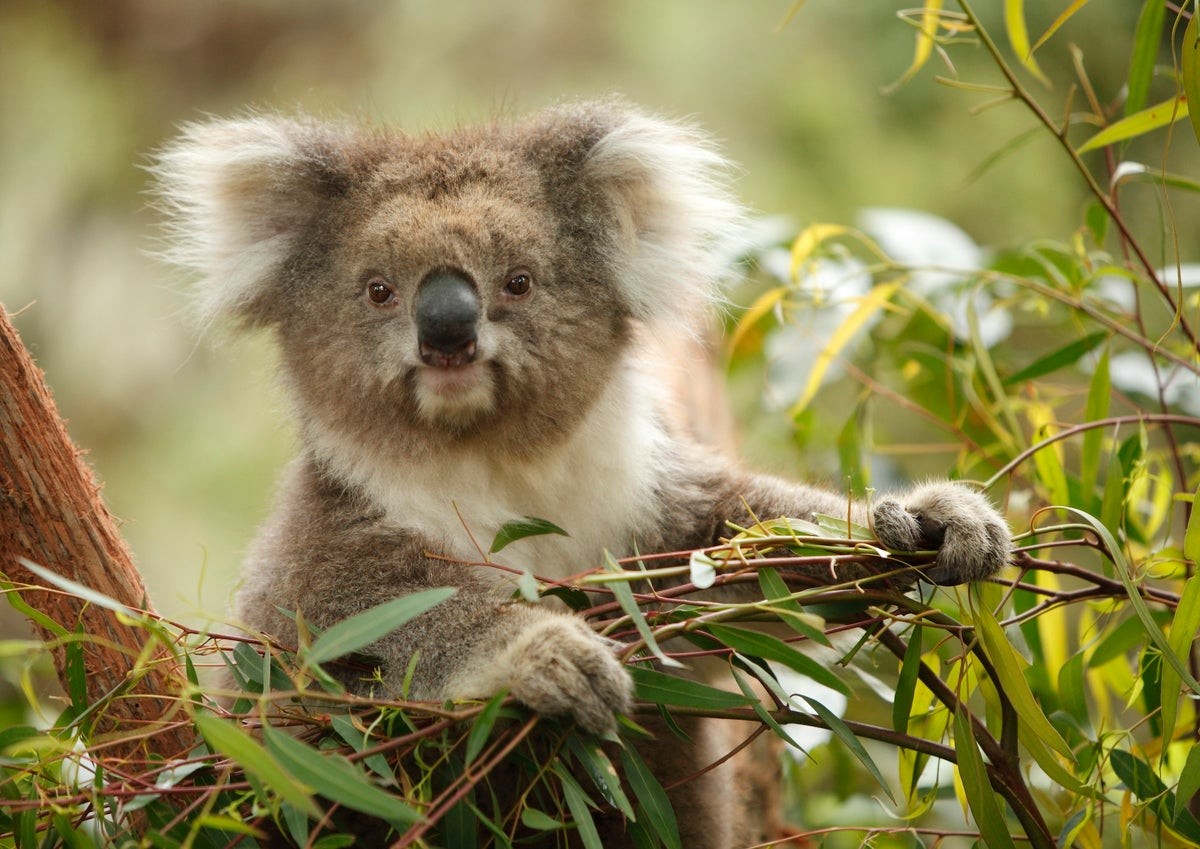
Koala populations in Australia demonstrate a surprising genetic recovery after severe population bottlenecks, challenging the long-held assumption that such events inevitably lead to extinction. A new study reveals that certain koala groups, despite facing extreme inbreeding and genetic defects due to historical overhunting, have rebounded with increasing genetic diversity over the past 40 generations.
Historical Bottleneck and Unexpected Recovery
Historically, the Victorian koala population experienced a drastic decline in the late 1800s because of the fur trade, leading to a genetic bottleneck. This reduction in genetic diversity typically predicts long-term inbreeding and eventual extinction. However, researchers found that effective population sizes—a measure of genetic diversity distributed among individuals—have increased in Victoria, while populations in Queensland and New South Wales, previously considered healthier, have shown declines.
“The assumption that a bottleneck leads to eventual extinction is not set in stone,” emphasizes Rachel O’Neill, a genome biologist at the University of Connecticut.
The Role of Rapid Population Growth
The key to this recovery isn’t just survival, but explosive population growth. Victoria’s koalas are now so abundant that conservation efforts focus on limiting their numbers rather than boosting them. This rapid expansion has created opportunities for new mutations and the reshuffling of existing genes through recombination.
Collin Ahrens, an evolutionary biologist at Cesar Australia and study co-author, explains: “Recombination reshuffles the genetic variation. That’s really important and something that’s been really difficult to measure.” In essence, the sheer number of individuals allowed for the restoration of genetic diversity despite the initial collapse.
Parallels with Invasive Species
This phenomenon echoes the success of invasive species, which often thrive after being introduced with only a few individuals to a new environment. Rather than succumbing to inbreeding, these species rapidly proliferate, sometimes to the detriment of native ecosystems. The Victorian koala case shows that similar dynamics can occur even in native species under pressure.
Implications for Conservation
The findings have broader implications for conservation efforts. Many species face population declines due to climate change and human activity, but this research suggests that rapid expansion, when possible, may restore evolutionary potential.
“If we give them the right resources and tools to have some kind of rapid expansion, maybe it also can restore their evolutionary potential,” notes Caitlin Curry, a population geneticist at the San Diego Zoo Wildlife Alliance.
In conclusion, the surprising resilience of Victorian koalas demonstrates that genetic recovery is possible even after severe population bottlenecks, provided conditions allow for rapid growth and recombination. This insight offers a cautiously optimistic perspective for conservationists working to preserve species facing similar threats.