


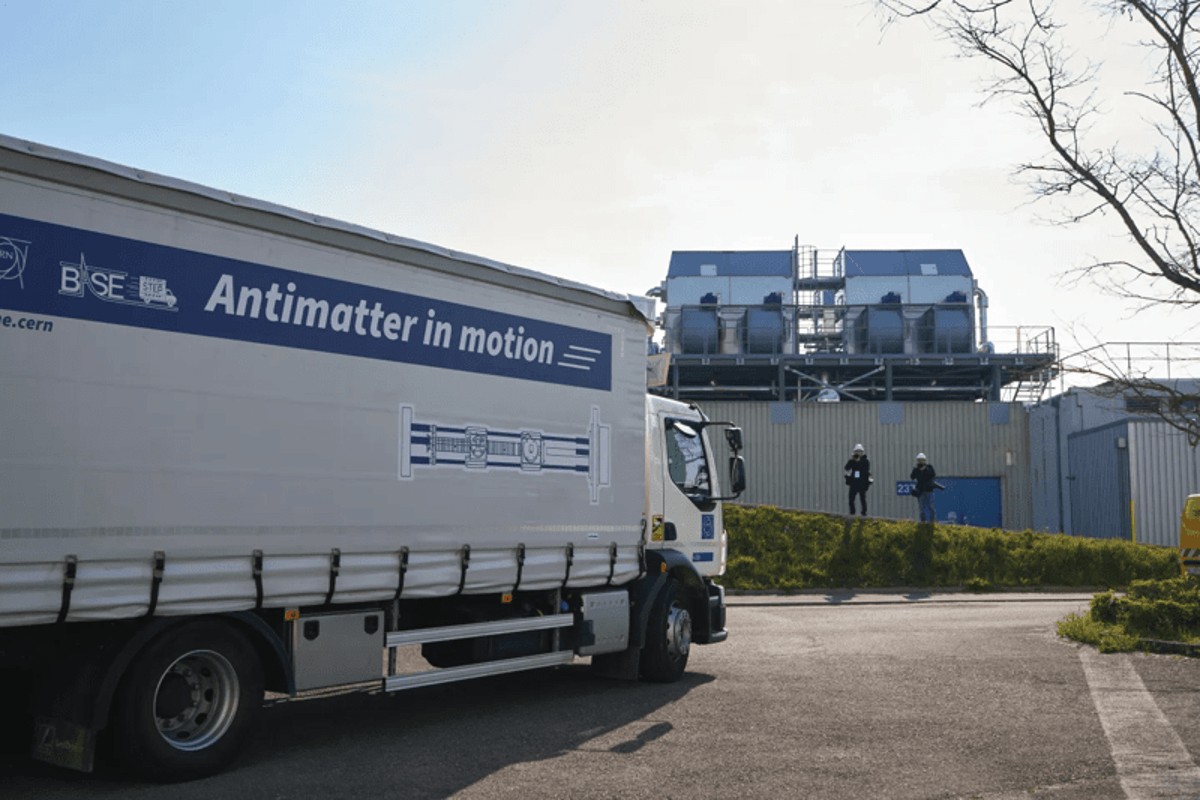
For the first time, physicists have successfully transported antimatter outside of a laboratory setting, marking a significant step toward unlocking deeper insights into one of the universe’s most elusive substances. The experiment, conducted by researchers at CERN and Heinrich Heine University Düsseldorf, involved carefully moving 92 antiprotons in a specialized trap via a truck ride across the CERN campus.
The Challenge of Handling Antimatter
Antimatter presents unique handling challenges. It’s the mirror image of ordinary matter, composed of antiparticles with opposite electrical and magnetic charges. When antimatter comes into contact with matter, they annihilate each other, releasing energy. This makes antimatter incredibly rare and difficult to study, as containment is paramount.
How the Transport Worked
Researchers engineered a one-ton magnetic trap to suspend the antiprotons in a vacuum, cooled to extremely low temperatures to minimize energy. The trap’s design was carefully calibrated to fit through standard doorways, ensuring portability despite its complexity. During the 90-minute test drive, scientists monitored the antiprotons, confirming their stability throughout the journey.
Why This Matters
The ability to move antimatter is crucial for precise measurements. CERN’s facilities generate “magnetic noise” that interferes with accurate antimatter analysis. Transporting antimatter to quieter labs allows for cleaner data collection. The ultimate goal is to move antiprotons on an eight-hour drive from CERN to Heinrich Heine University Düsseldorf for further study.
The Bigger Question: Matter vs. Antimatter
This breakthrough may help solve a fundamental physics puzzle: why the universe contains so much more matter than antimatter. If both are created in equal amounts, why isn’t there more antimatter? Answering this requires precise antimatter measurements, which this new transport method now enables.
“I think [the] truck drive was maybe the most exciting drive I’ve had,” said Christian Smorra, the project manager, highlighting the significance of this milestone for the field.
The successful transport of antimatter represents a major leap forward in antimatter research, opening doors to new experiments and potentially resolving long-standing questions about the universe’s composition.


