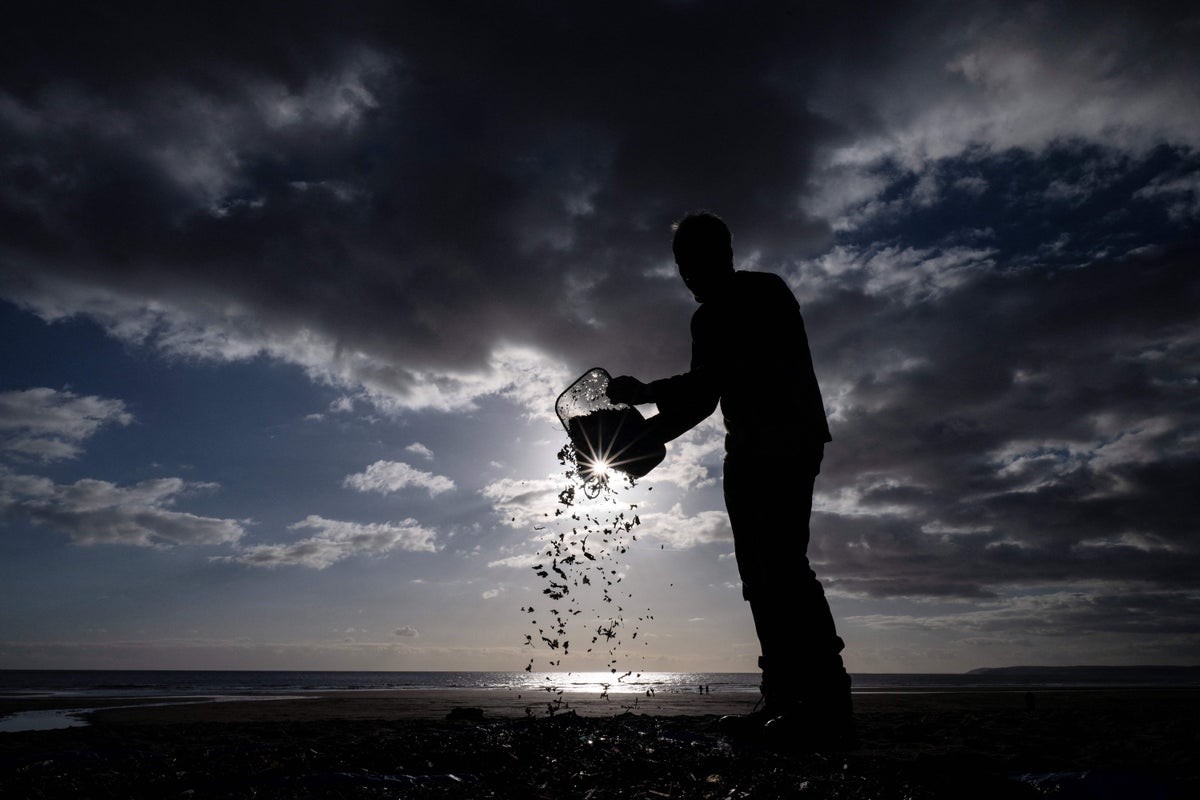
A recent study published in Nature reveals the staggering scale of microplastic pollution in the atmosphere: 600 quadrillion particles released annually from land-based sources alone. This figure dwarfs ocean-based contributions, estimated at roughly 26 quadrillion particles per year. The findings highlight a critical gap in our understanding of microplastic distribution and underscore the urgent need for more precise global monitoring.
Land vs. Sea: A Vast Disparity
For years, scientists have struggled to quantify atmospheric microplastics due to their ubiquity and minute size (between one micron and five millimeters). The new estimate is based on analysis of 2,782 measurements from 283 global locations. The study found a median concentration of 0.08 particles per cubic meter over land, compared to just 0.003 particles per cubic meter over the sea. This demonstrates that land-based emissions dominate atmospheric microplastic pollution, a finding that significantly alters previous assumptions.
Why This Matters: Bridging the Knowledge Gap
Previous atmospheric microplastic estimates have varied wildly (e.g., from 0.004 to 190 particles per m3 along the Chinese coast). The discrepancy between older data and the new findings emphasizes the unreliability of existing monitoring methods. Andreas Stohl, lead author of the study, explains that while uncertainties remain, the research has narrowed the range of possible emission figures. Accurate tracking is essential because microplastics are easily dispersed by wind and nearly impossible to remove from the environment.
Future Implications
The researchers hope their work will establish a baseline for more detailed future studies. Current methods struggle to detect the smallest particles, and better global measurement standards are critical. The sheer volume of microplastics entering the atmosphere raises concerns about respiratory health, ecosystem impacts, and long-term environmental consequences.
Accurate monitoring of microplastic pollution is no longer just an academic pursuit; it’s a fundamental step toward protecting human and planetary health.
The findings serve as a stark reminder that the plastic crisis extends far beyond oceans, infiltrating even the air we breathe.