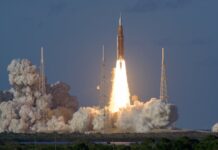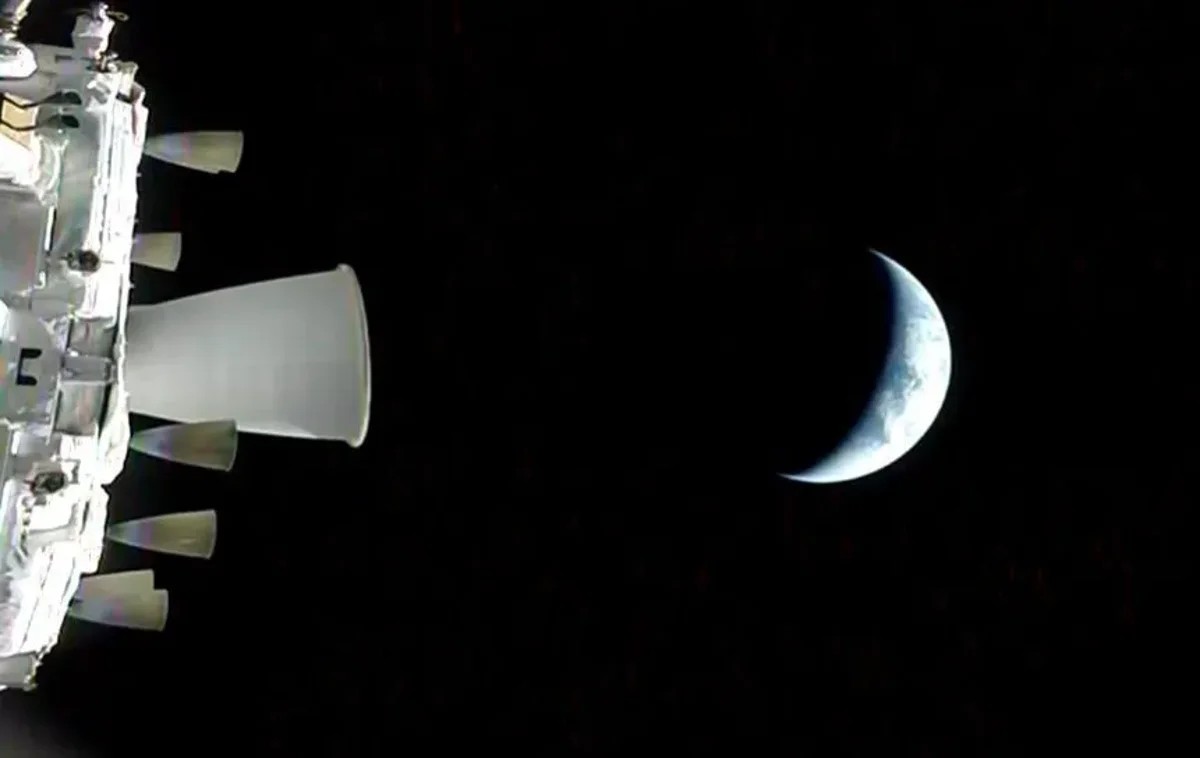
The Artemis II mission, NASA’s latest crewed lunar endeavor, has officially begun. The first day in space was a mix of critical systems checks, including a notable hiccup with the spacecraft’s new toilet, and essential maneuverability tests.
Initial Systems Checks
The four-person crew—NASA astronauts Reid Wiseman, Victor Glover, and Christina Koch, alongside Canadian Space Agency astronaut Jeremy Hansen—immediately began testing the Orion spacecraft’s key functions upon reaching orbit. One of the first priorities? Ensuring the toilet worked as intended. This marks the first time a moon-bound spacecraft has featured a fully functional waste management system, a significant upgrade from the bags used during the Apollo missions.
However, early testing revealed a “blinking fault light” on the toilet, prompting immediate troubleshooting. NASA confirmed the issue was swiftly resolved, though the incident highlights the complexities of maintaining even basic functions in deep space. The toilet itself is a substantial improvement, constructed from titanium and designed for simultaneous urine and fecal collection, and it includes a privacy door—a luxury astronauts previously lacked.
Software Glitches and Operational Tests
Beyond the toilet, the crew encountered software inconsistencies. Audio from the Orion’s livestream captured astronauts discussing conflicting versions of Microsoft Outlook that were not functioning correctly. NASA has yet to publicly address these software problems.
Despite these glitches, the astronauts proceeded with vital operational tests. Victor Glover, the mission’s pilot, conducted a series of maneuvers to assess Orion’s agility, including movements in all directions (up, down, left, right) and controlled tilting. These tests are crucial for ensuring the spacecraft can execute precise maneuvers during future lunar missions.
Disposal Burn and Trajectory Correction
The crew also used the interim cryogenic propulsion stage (ICPS)—the engine originally attached to the Space Launch System (SLS) rocket—as a docking target for testing. After the test, the ICPS will be intentionally deorbited via a “disposal burn,” sending it crashing into the Pacific Ocean.
Orion performed additional burns to raise its orbital path, securing its trajectory for the upcoming lunar journey. This ensures the spacecraft remains on course as it orbits Earth before heading toward the moon.
The Artemis II mission is a blend of cutting-edge engineering and inevitable real-world troubleshooting. While the toilet issue and software glitches are minor setbacks, they underscore the challenges of human spaceflight. The successful maneuverability tests confirm Orion’s readiness for the mission ahead, setting the stage for a historic return to lunar orbit.