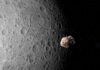
NASA’s Artemis II mission is entering its most critical phase yet. After five days in transit, the four-person crew is nearing a historic lunar encounter that will push the boundaries of human exploration and set new distance records for our species.
A Bridge Between Eras
The mission is not just a leap forward, but a continuation of a legacy. On day five, the crew—Reid Wiseman, Christina Koch, Jeremy Hansen, and Victor Glover —received a poignant message from Apollo 16 moon walker Charlie Duke. His words served as a bridge between the Apollo era of the 1970s and the modern Artemis program, reminding the crew that they carry the torch of human lunar exploration.
This connection highlights the cyclical nature of space exploration: while technology has advanced exponentially, the human element—the drive to explore and the sense of global support—remains constant.
Safety Drills and Precision Maneuvers
As the mission progressed, the crew focused on rigorous technical testing to ensure survival in the harsh environment of deep space:
- Survival Systems Test: Astronauts Wiseman and Glover conducted emergency drills using the Orion Crew Survival System (OCSS). These bright-orange space suits act as “lifeboats,” capable of providing up to six days of oxygen should the spacecraft depressurize. The crew practiced donning the suits rapidly, climbing into their seats, and managing basic functions like eating and drinking through helmet ports.
- Trajectory Correction: To ensure the spacecraft remained on its precise path toward the moon and back, the crew executed a “burn”—a brief firing of the Orion’s auxiliary thrusters—to correct their outbound trajectory.
The Lunar Encounter: A Record-Breaking Milestone
The mission is now entering the “lunar sphere of influence,” where the Moon’s gravity becomes the dominant force acting on the spacecraft. The upcoming 24 hours represent a series of “firsts” and “greatests”:
1. The Far Side Observation
During a six-hour observation period, the crew will pass within roughly 4,070 miles of the lunar surface. This will provide a rare opportunity to witness the lunar far side with human eyes, targeting 35 specific sites for observation and capturing thousands of high-resolution images.
2. Breaking the Distance Record
At approximately 7:07 P.M., Artemis II is expected to reach a distance of 252,760 miles from Earth. This will surpass the distance record previously held by Apollo 13 since 1970, marking the farthest any human beings have ever traveled from our home planet.
3. A Rare Celestial View
As the flyby concludes, the crew will have the unique vantage point of observing a solar eclipse from space, offering a glimpse of the sun’s corona and potential flashes of micrometeoroid impacts on the moon below.
The Human Perspective: A “Spaceship Called Earth”
Beyond the technical achievements, the mission has elicited profound reflections from the crew. As they move further from home, the astronauts have expressed a heightened sense of connection to Earth and their families.
Mission pilot Victor Glover offered a perspective on global unity that resonates deeply as the crew nears the Moon. He reminded listeners that while the astronauts are in a spaceship far from home, everyone on Earth is traveling on a “spaceship called Earth.” His message emphasized that the distance from our planet doesn’t make the mission special; rather, it highlights the preciousness of the shared home we all inhabit.
“Maybe the distance we are from you makes you think what we’re doing is special. But we’re the same distance from you… you are special.” — Victor Glover
Conclusion
As Artemis II prepares for its record-breaking lunar flyby, the mission stands as a testament to both technical precision and the enduring human spirit. The upcoming encounter will not only provide unprecedented scientific data but will also redefine our understanding of our place in the solar system.