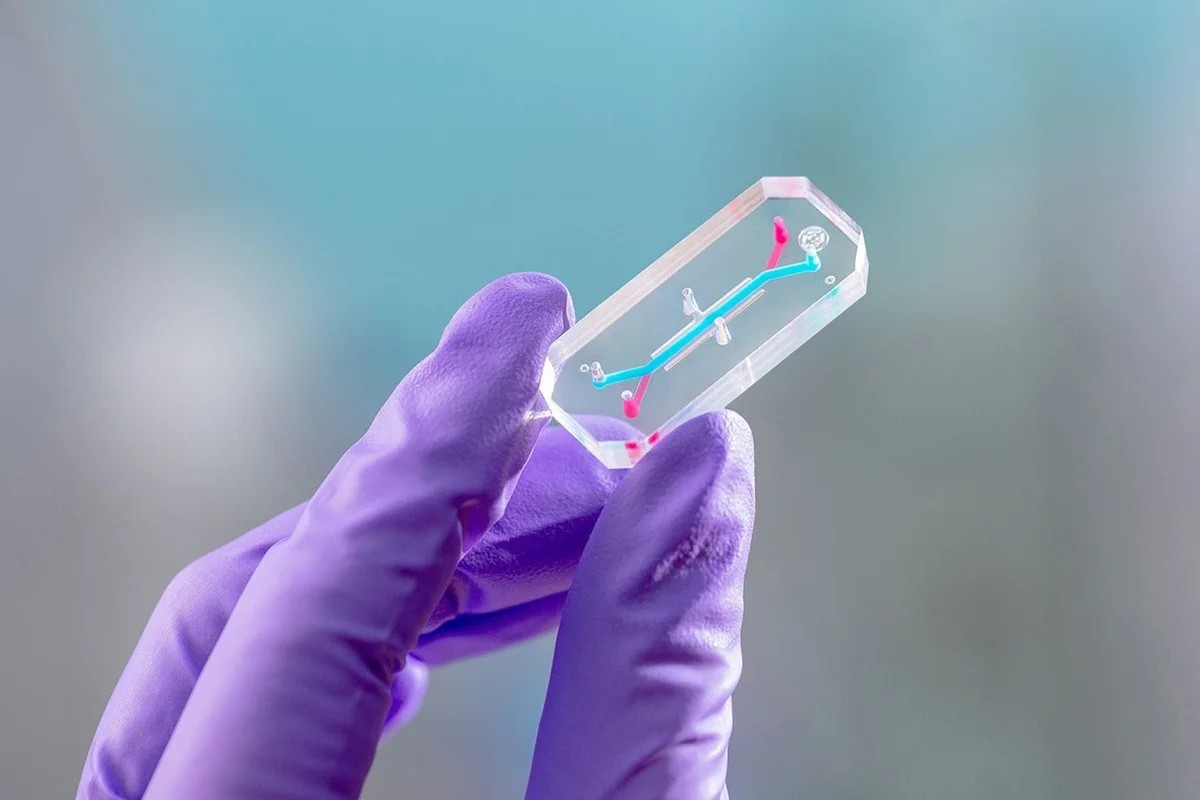
NASA’s upcoming Artemis II mission isn’t just about returning humans to the Moon; it’s a pivotal step in understanding how the human body responds to the harsh realities of deep space. Long-duration space travel exposes astronauts to unique dangers – especially radiation and microgravity – and mitigating these risks is paramount before establishing a sustained lunar presence. A groundbreaking experiment, AVATAR (A Virtual Astronaut Tissue Analog Response), is poised to deliver critical insights.
The Organs-on-a-Chip Revolution
AVATAR utilizes cutting-edge “organs-on-a-chip” technology. These miniature devices, roughly the size of a USB drive, house living human cells arranged to mimic the function of specific organs. What sets them apart is their personalization : researchers can cultivate cells from individual astronauts, creating a precise model of their physiology. This allows for highly tailored research into how their bodies will react to spaceflight.
This isn’t new; scientists have used these models on Earth since 2010, testing drugs, studying disease progression, and mapping microbial interactions. The International Space Station has hosted similar experiments in low-Earth orbit. However, Artemis II will push the boundaries by taking this technology beyond Earth’s protective magnetic field.
Beyond Low Earth Orbit: Unlocking Lunar Space Biology
The Artemis II mission will expose the AVATAR chips to radiation levels and microgravity conditions far more intense than anything previously studied. The data gathered could be transformative, potentially enabling NASA to develop personalized medical kits for astronauts. This is a critical advancement because space travel demands extreme efficiency; astronauts can’t carry unlimited supplies. Knowing precisely what medications and countermeasures are needed—based on individual biological responses—is essential.
Tracking Cellular Changes in Real Time
The experiment’s design is meticulous: bone marrow cells from the Artemis II crew will be grown on chips, with matching sets kept on Earth as controls. Upon the mission’s return, researchers will use single-cell RNA sequencing to map gene-level changes within the cells. This level of detail has never been achieved before in deep-space research.
The Future of Space Medicine
The technology behind AVATAR originated in Donald Ingber’s lab at Harvard University over a decade ago, and it’s rapidly evolving. Future missions could deploy many more chips, equipped with real-time imaging and functional sensors. This would allow for continuous monitoring during flight, offering an unprecedented understanding of the human body in space.
“Mass is always a critical commodity. We can’t bring all the medicine there is… having this ability to know exactly what you need to bring is hugely important.” – Anthony Colaprete, NASA Ames Research Center.
The miniaturization of these experiments means more science can be packed into limited spacecraft volume. Ultimately, AVATAR and similar technologies are not just about making space travel safer; they represent a leap forward in personalized medicine with applications far beyond the cosmos.
The Artemis II mission is a critical step toward sustainable space exploration, but its true legacy may lie in the medical breakthroughs it unlocks for both astronauts and people on Earth.