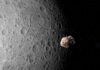
NASA successfully launched its Artemis II mission on Wednesday evening, sending a crew of four astronauts on a 10-day journey around the far side of the moon. This marks a significant step toward sustained lunar exploration, with the crew poised to travel farther from Earth than any human before – exceeding 250,000 miles from our planet and venturing over 4,000 miles beyond the moon’s orbit.
A Historic Liftoff
The 212-foot Space Launch System (SLS) rocket lifted off at 6:35 P.M. EDT from Kennedy Space Center in Florida, carrying the Orion capsule. The capsule, roughly the size of two minivans internally, will serve as the crew’s habitat throughout the mission. The astronauts – Reid Wiseman, Christina Koch, Victor Glover, and Jeremy Hansen – confirmed their readiness just minutes before launch.
The crew followed a long-standing NASA tradition, playing cards until the mission commander, Wiseman, lost – a ritual dating back to Apollo 7 in 1968. This seemingly casual moment underscores the blend of rigorous preparation and human routine that defines spaceflight.
Overcoming Technical Hurdles
The launch wasn’t without its challenges. Engineers addressed last-minute issues with the SLS’s flight termination system and a battery in the Launch Abort System, both resolved swiftly. These problems highlight the inherent complexities of rocketry, where even minor glitches can halt a multi-billion-dollar mission. The SLS has faced fuel leak issues in the past, issues that plagued its predecessor, Artemis I. NASA officials have expressed confidence that these problems are now fixed.
The Mission’s Significance
This flight isn’t just about distance; it’s about validation. The Artemis II crew will test critical systems and technologies vital for NASA’s long-term lunar ambitions. The agency now plans to land humans on the moon again by 2028 – the first crewed landing since 1972 – with the ultimate goal of establishing a permanent research base within the next decade. This renewed focus on the moon represents a shift in space exploration, moving beyond brief visits toward sustained presence and scientific infrastructure.
The astronauts will also observe previously unseen portions of the moon’s far side, relying on direct human observation to complement satellite imagery. This firsthand data will be invaluable as NASA refines its plans for long-term lunar operations.
The Artemis II mission is not merely a return to the moon, but a stepping stone toward a future where humans live and work beyond Earth.
The success of Artemis II is crucial for maintaining momentum in NASA’s lunar program, ensuring that the agency remains on track to fulfill its ambitious goals for deep-space exploration.