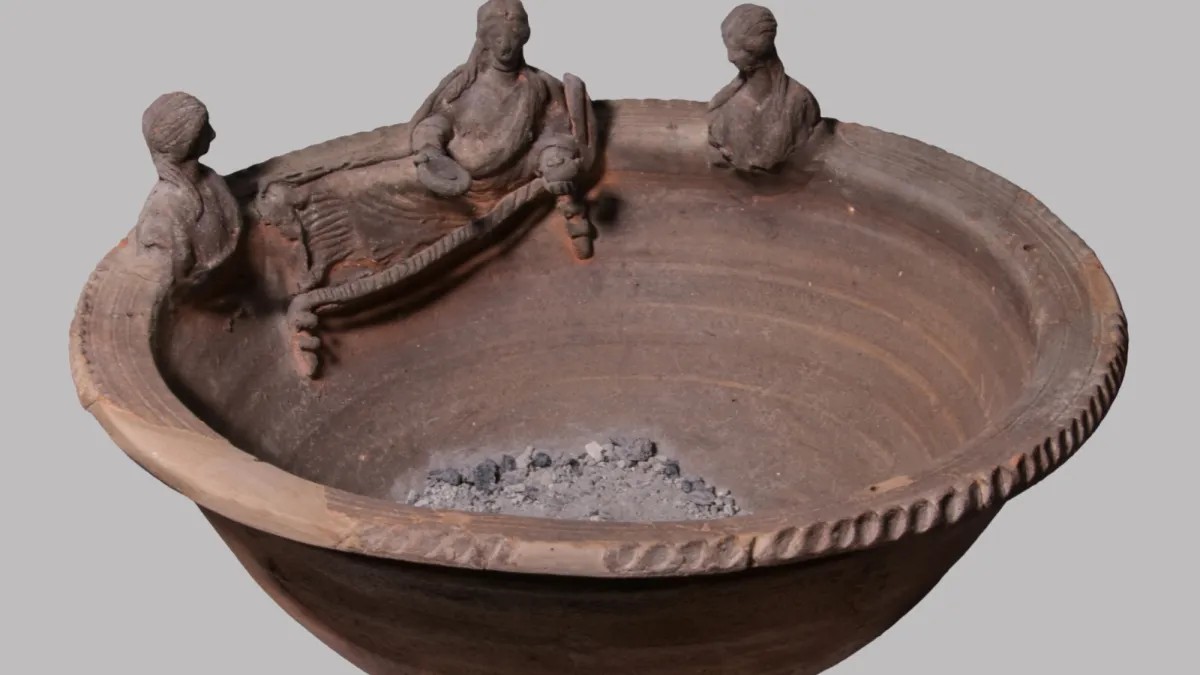
While the tragic eruption of Mount Vesuvius in 79 CE is most often remembered for the ash that buried Pompeii, that same volcanic debris has provided a rare sensory window into the past. Beyond the famous plaster casts of victims, scientists are now using advanced molecular analysis to reconstruct the olfactory landscape of the ancient Roman city.
Beyond Local Flora: A Global Trade Network in a Small Burner
Recent research published in the journal Antiquity has moved beyond traditional archaeology to examine the chemical residues left inside domestic incense burners. These vessels were central to Roman religious life, used in household altars to offer fragrances to the gods.
The study, led by archaeologist Johannes Eber of the University of Zurich,, revealed that the scents used in Pompeian homes were far more complex than previously thought. While many ingredients were sourced from local plants,, researchers also identified traces of imported resins.
These resins likely originated from tropical regions in Africa or Asia. This discovery is significant because it provides physical evidence of Pompeii’s integration into a vast, sophisticated international trade network. It suggests that even the most private religious rituals in a Roman household were influenced by goods traveling thousands of miles across ancient maritime routes.
Rituals and Residues: Wine and Worship
The scientific investigation also uncovered unexpected organic materials that align closely with historical descriptions of Roman ritualistic behavior.
The Presence of Grape Products
Maxime Rageot, a biomolecular archaeologist at the University of Bonn, noted that molecular analysis identified grape-based products within one of the burners. This finding offers a tangible link to Roman literature and art, which frequently depict the use of wine in religious offerings and libations.
Why Scientific Analysis Matters
This study marks the first time the contents of Pompeian incense burners have been scientifically scrutinized. It highlights a growing trend in archaeology: the shift from studying what people built to understanding how they lived through the microscopic traces they left behind. By combining traditional excavation with biomolecular science, researchers can reconstruct daily life—including its smells—with unprecedented accuracy.
A Sensory Connection to the Past
The findings coincide with a new permanent exhibition at the Pompeii Archaeological Park, which showcases a wide array of organic remains, including wooden artifacts and food residues. As technology advances, the ability to “reconstruct” the atmosphere of an ancient domus (Roman house) becomes more plausible.
The discovery of imported resins and ritualistic grape products transforms our understanding of Pompeii from a static archaeological site into a living, breathing center of global commerce and complex religious practice.
Conclusion
By analyzing the chemical fingerprints in ancient incense burners, scientists have proven that Pompeii was a cosmopolitan hub connected to distant continents. These microscopic residues do more than just suggest a scent; they reveal the deep economic and spiritual connections of the Roman world.