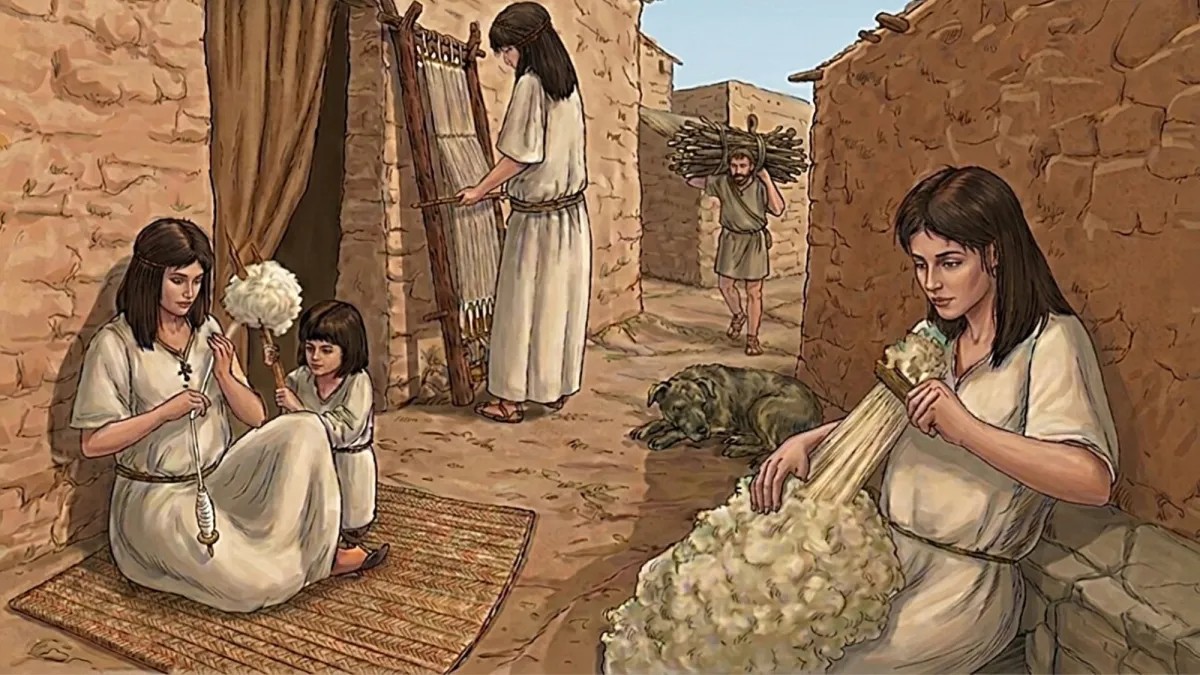
Archaeologists in Spain have unearthed remarkably well-preserved remains of a 3,500-year-old loom, offering an unprecedented look into textile manufacturing during the Bronze Age. The discovery at the Cabezo Redondo archaeological site sheds light on weaving techniques and suggests the region played a key role in the evolution of textile production.
The Significance of Warp-Weighted Looms
Warp-weighted looms were essential for creating fabrics in prehistoric Europe and the Mediterranean. These devices used stone or clay weights to maintain tension on vertical threads, allowing weavers to craft clothing and blankets. Due to their wooden construction and organic components, these looms rarely survive the test of time. Usually, researchers rely on the surviving loom weights—made of stone or clay—to infer how textiles were made.
A Rare Find: Preserved Wooden Components
The team at Cabezo Redondo discovered charred timbers and plant fiber ropes alongside clay loom weights. This is one of the oldest wooden looms ever found, a rare opportunity to study the loom’s actual construction and how it was used. The wood came from native Aleppo pine trees, while the weights themselves may indicate specialized textile production.
Early Evidence of Advanced Weaving Techniques
Analysis suggests this loom was capable of producing not just basic tabby weaves (common in earlier periods) but also denser, more complex textiles, including early twill weaves. Twill weaves, typically made from wool, didn’t become widespread until around 1,000 BCE, meaning the site may have been at the forefront of a technological shift. This suggests Cabezo Redondo was a notable center for textile innovation during a period when wool became more prevalent and weaving techniques diversified.
Implications for Understanding the Bronze Age
The discovery provides a rare snapshot of Bronze Age craftsmanship. It moves beyond fragmented tools and weights to reveal the loom itself, frozen in time. This offers new insight into the daily lives and technological capabilities of people living nearly 3,500 years ago.
This discovery allows us to see not just the partial tools that are usually preserved, but the loom itself—frozen at the moment it was in use nearly 3,500 years ago—offering a rare glimpse into the everyday craft of Bronze Age weaving.
This find highlights the importance of southeastern Iberia in the development of Bronze Age textile technology. The preserved loom provides critical evidence for understanding how early weavers adapted their methods and materials to create more sophisticated fabrics.