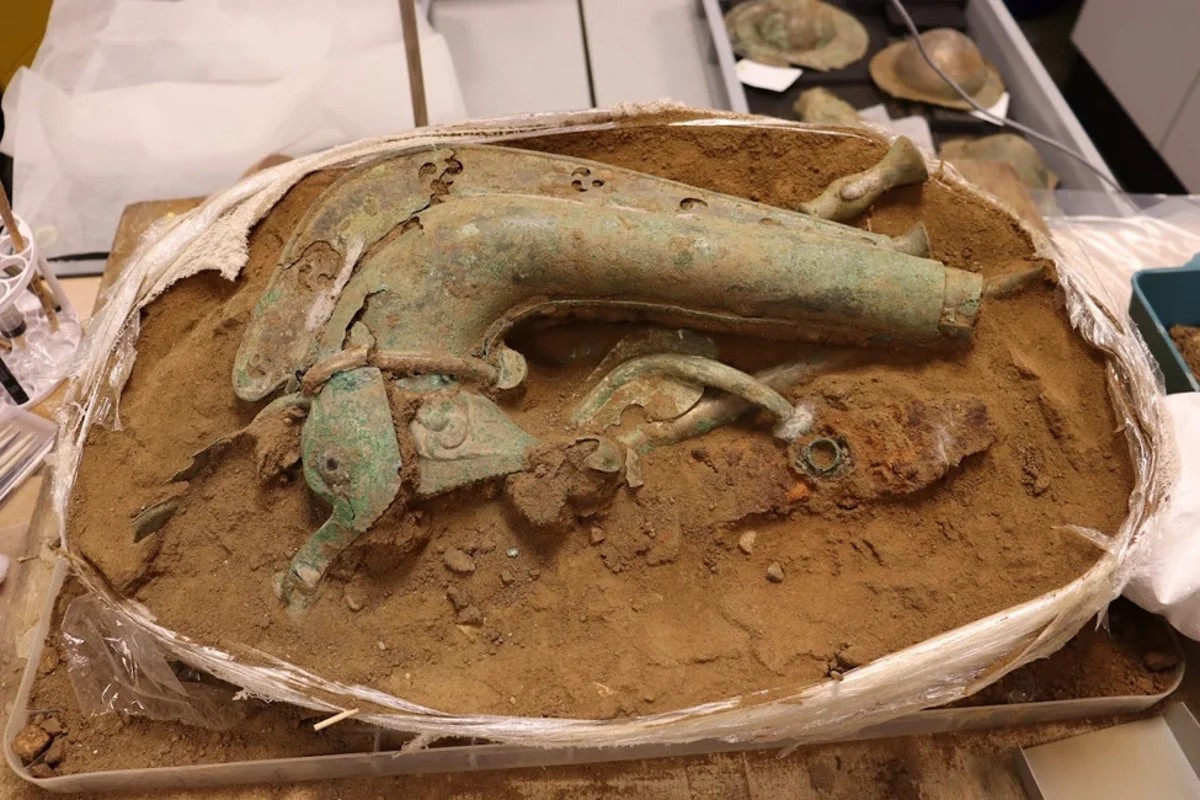
Archaeologists excavating a construction site in West Norfolk, England, have unearthed a remarkably well-preserved Iron Age battle trumpet – a carnyx – potentially linked to the Iceni tribe and their legendary queen, Boudica. The discovery offers a rare glimpse into the military culture of Celtic resistance against the Roman Empire around 60-61 CE.
A Rare Find in the Heart of the Iceni Territory
The carnyx, one of only three found in Britain and among the most complete examples in Europe, was discovered alongside other military artifacts: five shield bosses and a bronze boar’s head, likely a tribal standard. The site falls squarely within the historical territory of the Iceni, the tribe led by Boudica in her famous revolt against Roman occupation.
Why this matters: The Iceni rebellion was a major uprising that nearly drove the Romans out of Britain. The discovery of such high-quality military instruments in their heartland underscores the sophistication and power of this Celtic group.
Connecting the Trumpet to Boudica’s War
While a direct connection to Boudica herself cannot be definitively proven, the trumpet’s age aligns with her period of leadership. The carnyx would have been a fearsome psychological weapon on the battlefield, used to rally troops and intimidate enemies.
“I’ve been doing archaeology for over 40 years, and I’ve never seen anything like this,” said Mark Hinman, CEO of Pre-Construct Archaeology. His statement emphasizes the unprecedented nature of the find.
The question remains whether the artifacts were buried as part of a ritual deposit, a lost cache of military equipment, or hidden in anticipation of further conflict.
Implications for Understanding Celtic Warfare
The carnyx and associated finds provide valuable insights into the military practices of the Iceni and other Celtic groups resisting Roman expansion. The sheer quality of these objects suggests they belonged to high-ranking warriors or leaders.
The discovery reinforces the idea that Celtic warfare was not merely a chaotic clash of barbarians, but a structured, symbolic, and technologically advanced system of resistance. This find underscores how important archaeological discoveries are to understanding the past.
The artifacts will now undergo further study to reveal more about their origins and purpose, offering a clearer picture of life and warfare in Roman Britain.