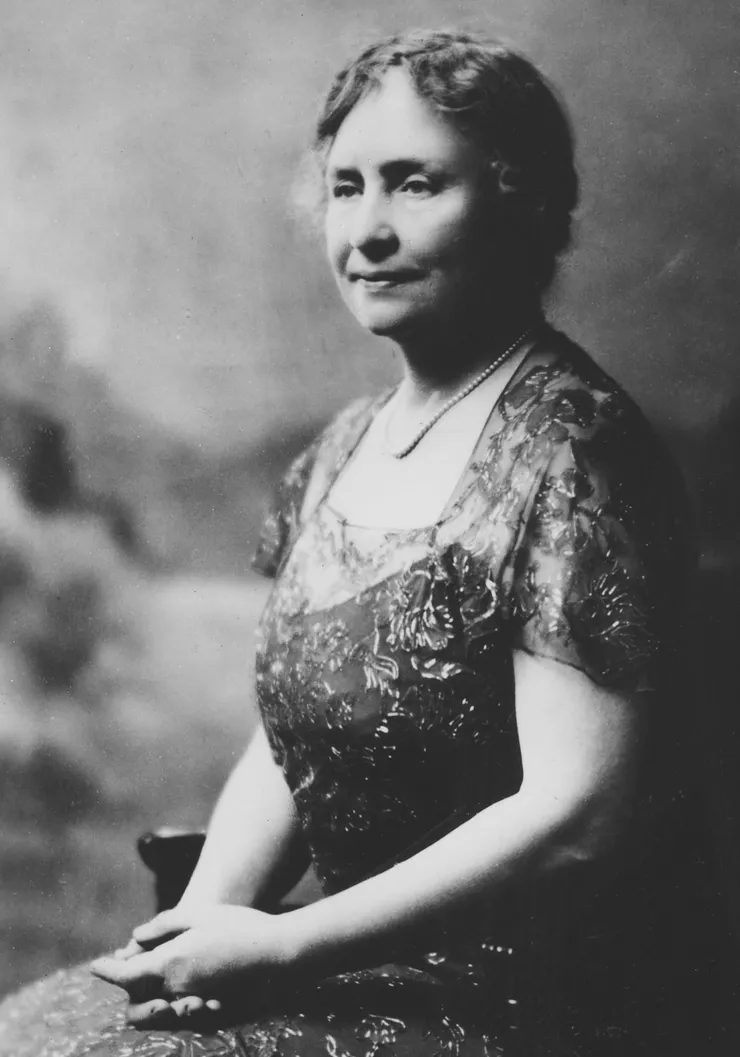
Helen Keller was just 19 months old when a severe illness stripped away her sight and hearing. The loss of sensory input halted her speech development almost immediately. For years, she existed in a world of isolation. Then came Anne Sullivan.
At age five, Keller began instruction from Sullivan. The method was tactile and revolutionary. Sullivan pressed the manual alphabet into the palm of Keller’s hand. This was not just spelling. It was the bridge to language.
Keller quickly moved beyond simple object names. She learned to read and write in Braille. This skill opened up literature and education in a way previously impossible for someone with her disabilities.
Her life story became a literary landmark. She authored several books. The most notable is The Story of My Life, published in 1902. It details the struggle and triumph of learning to communicate.
The drama of her early years was later captured on stage and screen. William Gibson’s play, The Miracle Worker, premiered in 1959. A film adaptation followed in 1962.
Keller lived until June 1, 1968, in Westport, Connecticut. She began life in Tuscumbia, Alabama, in 1880. Her journey from isolation to authorship remains a key case study in special education. It shows how patience and tactile methods can unlock human potential.